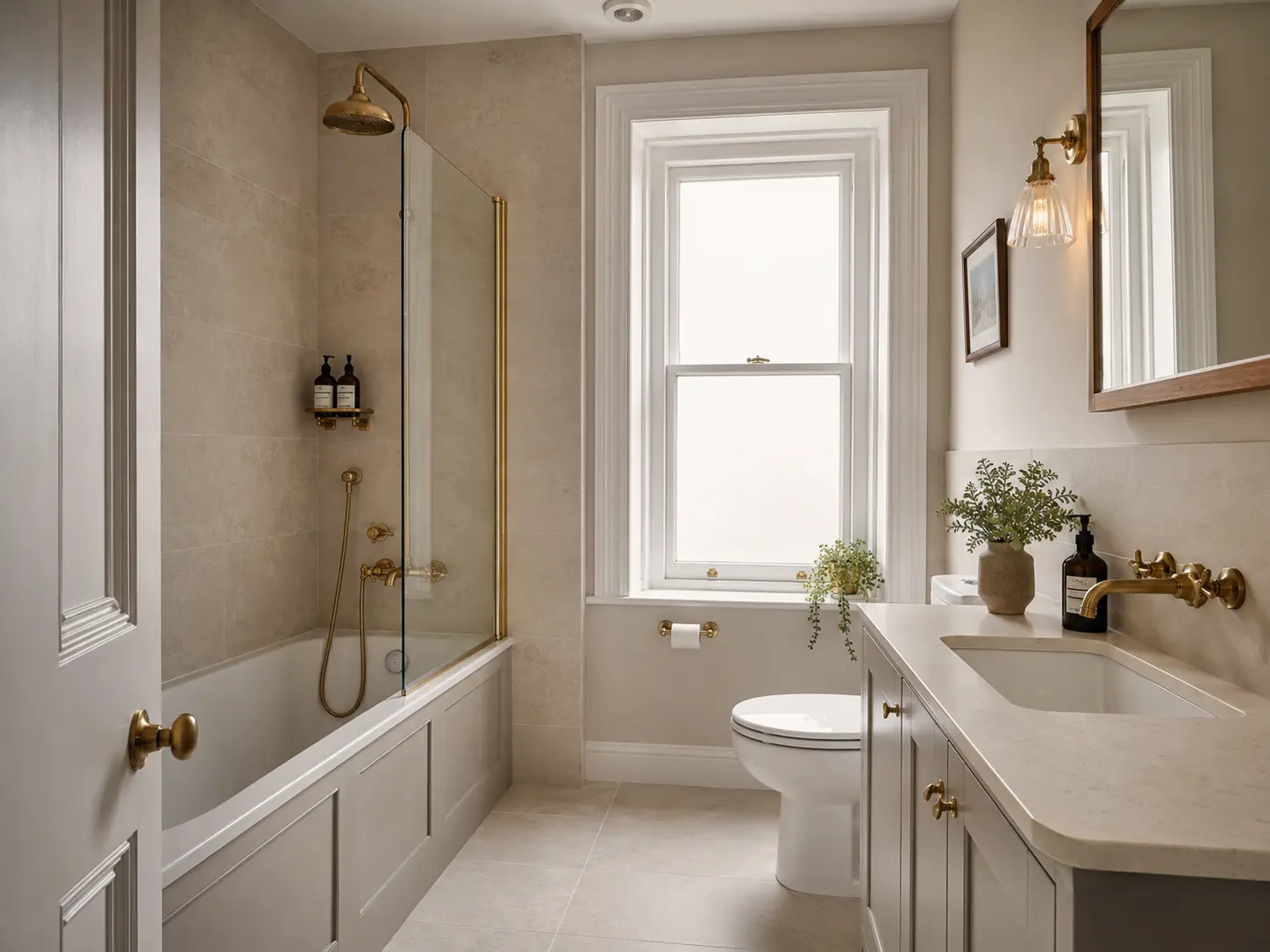
Look at the fittings rather than the style label
Traditional and contemporary describe a broad range of bathroom products. A traditional room might use panelled furniture and crosshead taps, while a contemporary one might have plain-fronted drawers and simpler tap shapes. Those labels do not tell you whether a basin is comfortable, a shower is easy to enter or the storage is useful. Start by identifying the actual details you like in each photograph.
You do not need to buy every item from one named style to create a bathroom you enjoy. A fitted bath can work in either arrangement, and traditional-looking furniture can contain practical modern storage. Keep the main choices coordinated, but compare them against the room and household. The appearance should support daily use rather than forcing you into fittings that are awkward to operate or clean.
Compare the furniture and storage first
Panelled cabinet fronts, shaped handles and familiar tap forms can give a bathroom traditional character. Plain fronts, wall-hung drawers and a smaller number of visible details are common in contemporary designs. Look beyond the outside of the cabinet. Check shelf heights, drawer space around pipes and whether the doors can open comfortably beside the other fittings in your room.
A wall-hung cabinet still needs suitable support and planned plumbing, while a floor-standing unit may have different cleaning access around its base. Neither arrangement is automatically the most practical. Decide what needs to be stored near the basin and how easily you can reach it. A cabinet that holds everyday toiletries properly is more useful than one chosen only because its front matches a preferred style.
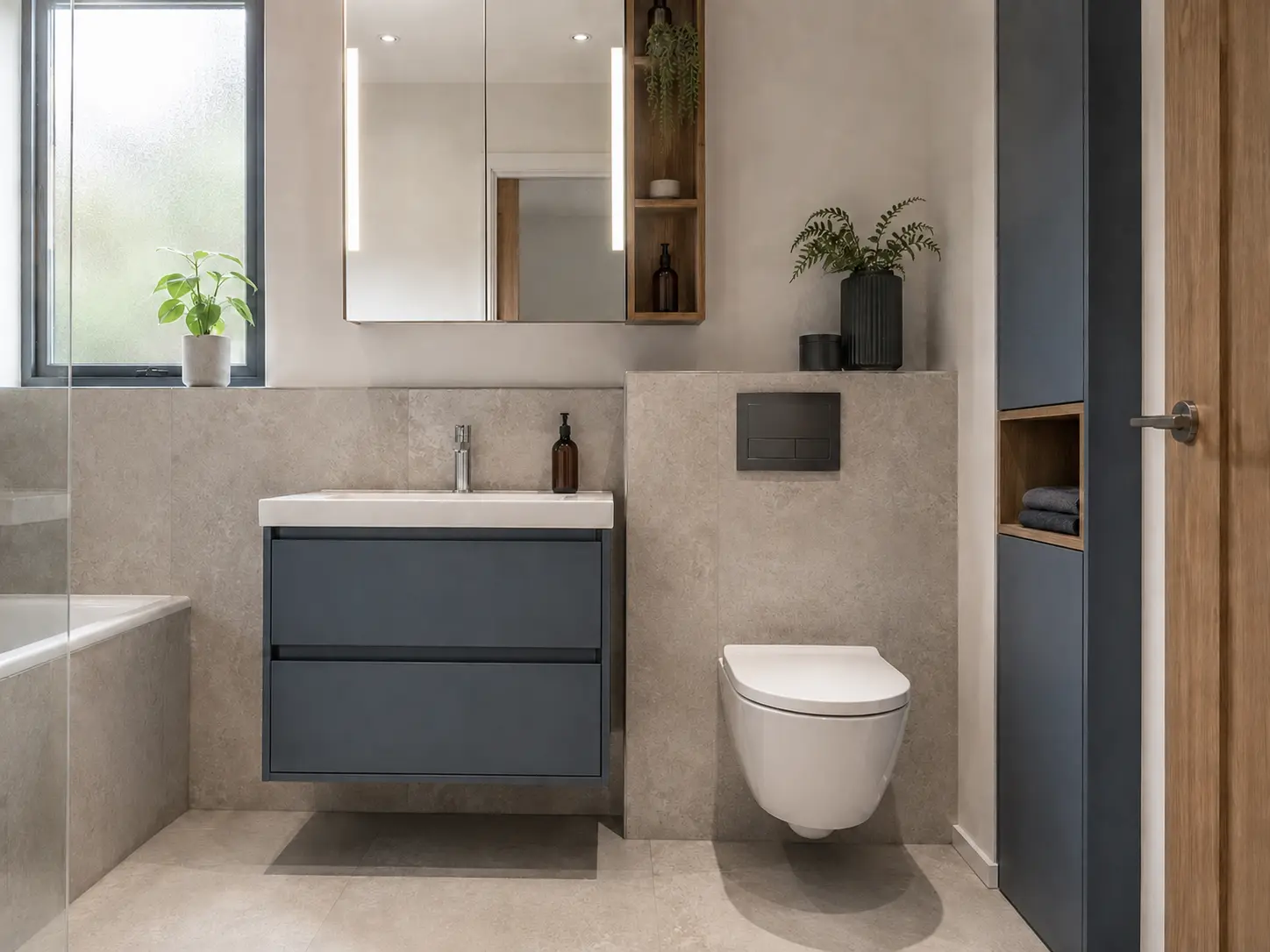
Check taps and controls for everyday comfort
Traditional taps can have crosshead or lever handles; contemporary ranges offer their own shapes and controls. Try operating shortlisted products where possible, especially if someone finds gripping or turning difficult. Check the tap reach over the basin and the space for washing your hands. A fitting can look well matched in a catalogue yet be uncomfortable when paired with a particular basin.
The finish also needs attention. Chrome, brass-coloured and dark fittings have different appearances and product-specific care instructions. Matching finish names between ranges do not guarantee identical colours. Ask which cleaning products are suitable and keep the actual product details with the quote. The shower system should be checked against the home's water supply and installation before it is ordered, whatever style its controls have.
Decide how the bath or shower will be used
A traditional bathroom does not require a large freestanding bath, and a contemporary bathroom does not require an open walk-in shower. A normal fitted bath with a suitable shower screen can provide both uses in a compact room. A separate shower may suit a household that no longer uses its bath. Compare the layout and routine before choosing a feature mainly for its appearance.
Check the entrance, controls and towel position in either design. A low-profile tray does not automatically mean a level entrance once the floor and drainage are allowed for. An open screen needs a plan for splashes, while a hinged door needs space to swing. These practical points remain the same whether the surrounding furniture is panelled, painted, wooden or plain-fronted.
Use finishes that suit the property and the work
A patterned floor or classic wall detail may suit the appearance you want, but it still needs appropriate preparation and fitting. Larger plain tiles or panels have their own joints, cuts and care requirements. View samples with the furniture and room lighting. A simple-looking contemporary finish can involve careful installation, just as a traditional one can be planned without decorative detail on every surface.
If you want to retain an existing feature, tell the fitter before the quote is prepared. Its condition and the work around it need checking. In a listed property, ask the council about consent before changes that could affect its character. Do not assume every older home is listed or that a style label determines the permissions needed; the actual property and proposed work matter.
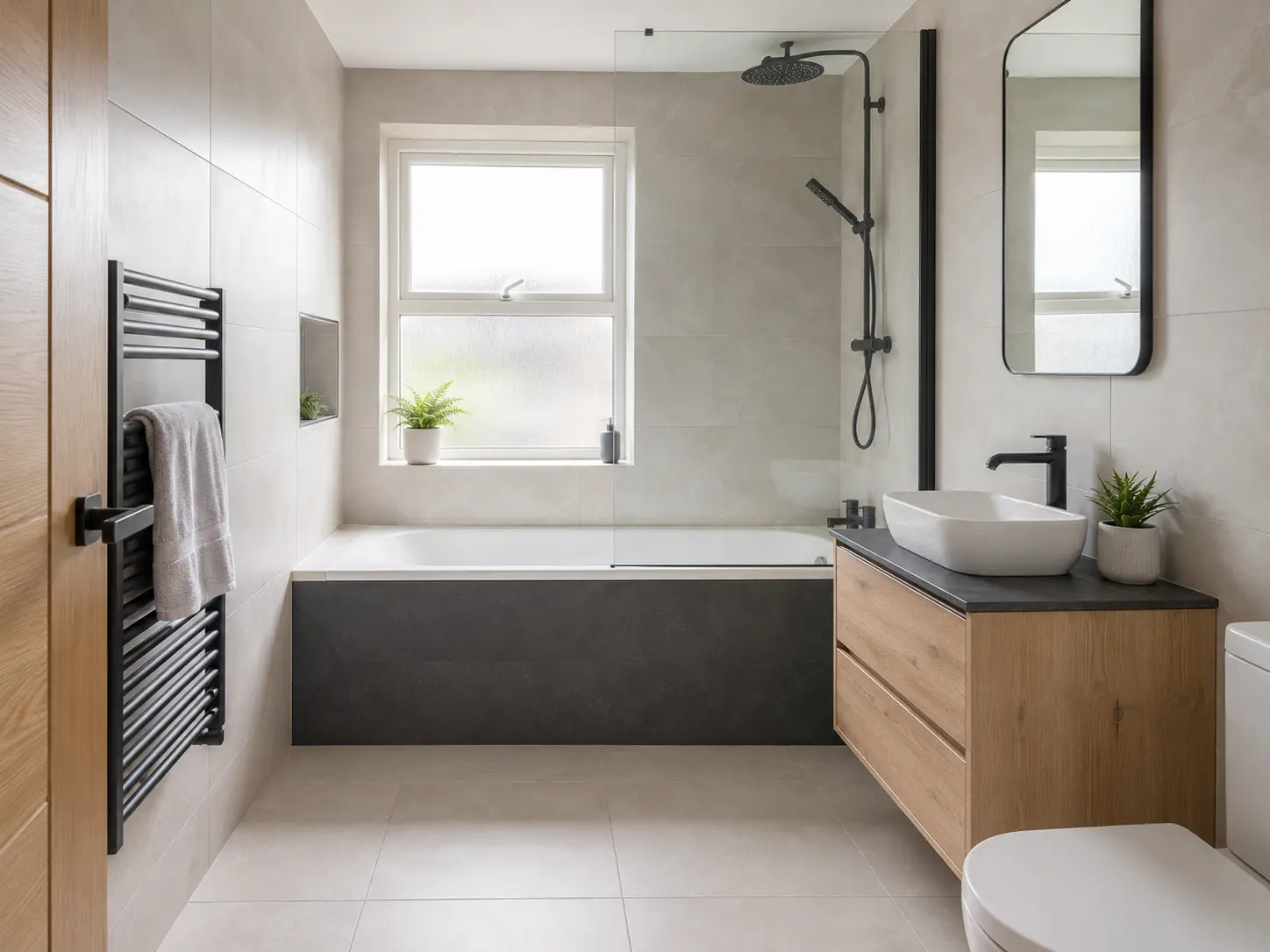
Choose a complete room that works for you
Make a short list of the details you prefer from each style, then compare them on a measured layout. Keep enough room at the basin, toilet and shower, and provide storage for the things you use. Lighting and ventilation should be included in the fitting plan, with qualified advice for electrical work. They are practical parts of the bathroom rather than accessories to add after choosing the look.
Record the final products, sizes, finishes and work in the written quote. If an item changes, check its effect on the layout and the other finishes before approving it. You can choose a clearly traditional room, a contemporary one or a careful mix. The useful test is whether the result looks right to you and makes washing, storage and cleaning straightforward for the household.
For the fitting service, see bathroom design in kirkcaldy. You can also read choosing bathroom colours and planning the bathroom layout.