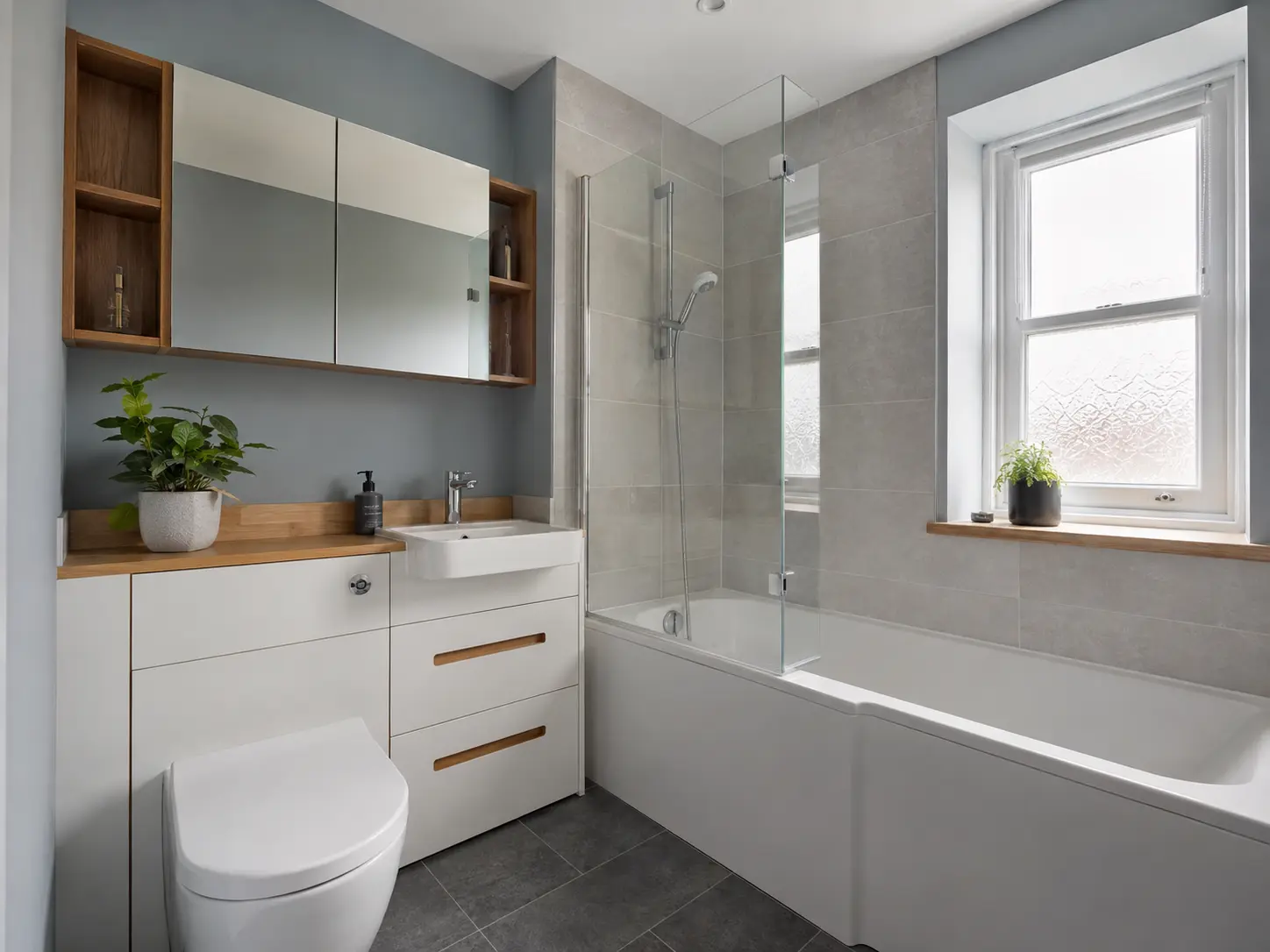
Begin with the parts you want to keep
If the bath, flooring or a cabinet will stay, use it as the starting point for your colours. A new wall finish needs to sit comfortably beside those existing surfaces. Take clear photographs and, where possible, bring a sample when looking at products. A white basin can look warmer or cooler beside different tiles, so choosing each part separately can lead to an unexpected combination.
For a complete refit, start with one feature you particularly like. It could be pale blue furniture, a wooden basin cabinet or a patterned floor. Choose the other main surfaces around it. This gives the room a clear starting point without giving every fitting a bold colour or pattern. You can still add colour with towels or smaller items that are easier to change later.
Look at samples in the bathroom light
A tile or furniture sample can look different in a showroom and at home. Place shortlisted samples in the bathroom and look at them during the day and under the lighting you normally use. Put wall samples upright and floor samples flat where practical. Their position affects the light they catch, so holding every sample at the same angle may give a misleading impression.
Compare the samples together rather than trying to remember one colour while looking at another. Pale grey can have a blue, green or warmer appearance, while whites are not all identical. If you are changing the lighting too, discuss that alongside the finishes. Avoid ordering a whole set of surfaces from small screen images alone, because device settings can change how colours appear.
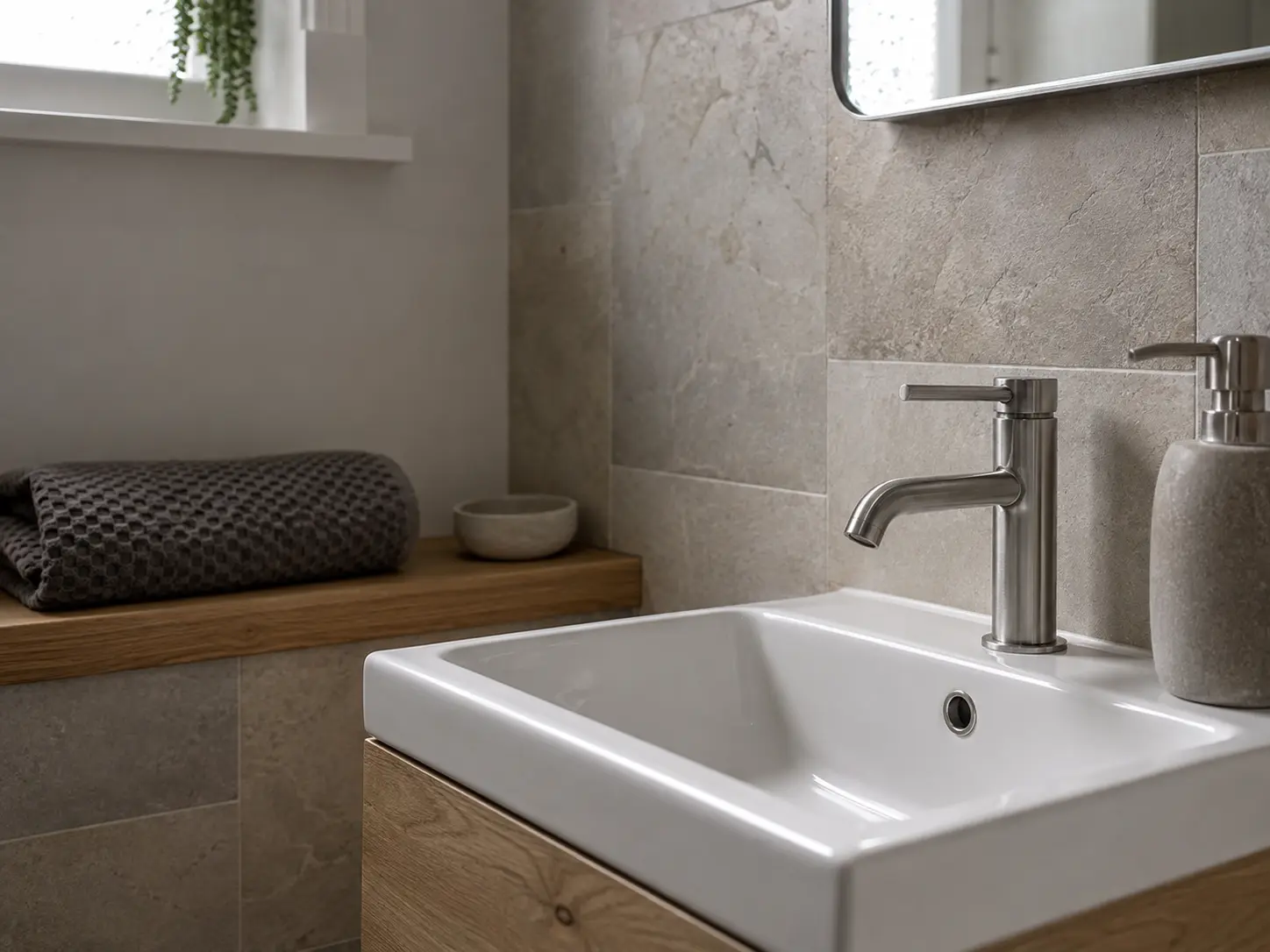
Decide where you want the main colour
Colour does not have to cover every wall. A coloured basin cabinet, tiled bath panel or defined shower wall can be the main feature while the rest of the room stays simpler. Think about what you see first from the doorway and which surfaces are visible most often. The feature should make sense with the layout rather than simply filling any remaining space.
A small bathroom can still use colour, but several competing patterns may make it harder to see the room as a whole. Compare a few deliberate combinations instead of adding a different finish to every section. There is no universal rule that a dark colour always makes a room feel smaller or that white fixes a cramped layout. The fittings, lighting and available space still matter.
Bring furniture and metal finishes into the choice
Wooden basin drawers can sit beside pale or dark walls, but compare the actual wood finish with the flooring. Similar-looking timber colours may clash when placed together. A plain painted cabinet is another option if the floor already has a strong pattern. Think about the mirror frame, handles and towel rail too, because they will be seen alongside the larger furniture pieces.
Tap and accessory finish names vary between ranges. Two products described as brushed brass or black may not look exactly alike. View samples or the actual products if matching matters to you. Also ask about their care instructions. The finish you choose should suit ordinary cleaning and use, rather than being selected only because it matches one photograph of a new bathroom.
Check the joints and edges, not just the colour
Grout, panel joints, trims and seals form part of the finished appearance. A tile sample does not show how the grout will divide the wall, and a small panel sample does not show where full-size sheets will meet. Ask the fitter to explain these details on the layout. The positions around windows, corners and shelves can make a noticeable difference to the result.
Floor colour should also be considered alongside its suitability for the intended use. Choose a product for the bathroom conditions first, then compare the available finishes. Read the cleaning guidance for the selected surface and ask how marks or damage would be dealt with. A colour that looks attractive in the sample is only part of choosing a finish you can look after comfortably.
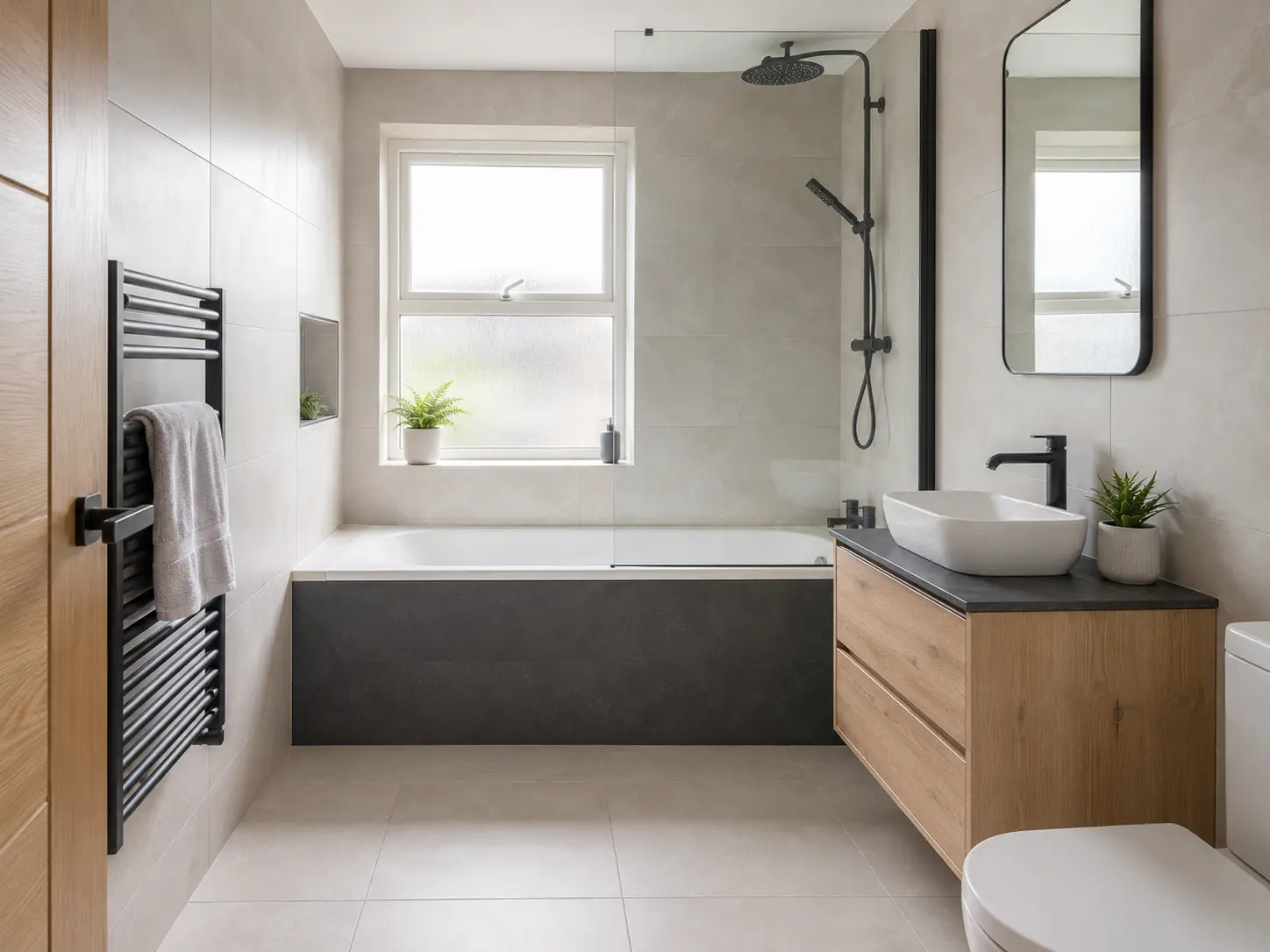
Record the final colours with the product list
Once you choose, keep the product names, colour codes, sizes and finish descriptions with the quote. A general note such as grey tiles leaves too much room for misunderstanding. Ask to approve any replacement if an item becomes unavailable, and compare it with the other choices before accepting it. A small change in one finish can alter how the whole set looks together.
Use the home appointment to connect the colour ideas with the room measurements and fitting work. The bath or shower, storage and entrance still need to work properly. Choose a combination you enjoy looking at, with products you understand and can maintain. That gives you a more useful plan than following a colour trend without checking how it will look and function in your own bathroom.
For the fitting service, see bathroom design in kirkcaldy. You can also read choosing neutral bathroom colours and planning a dark bathroom.