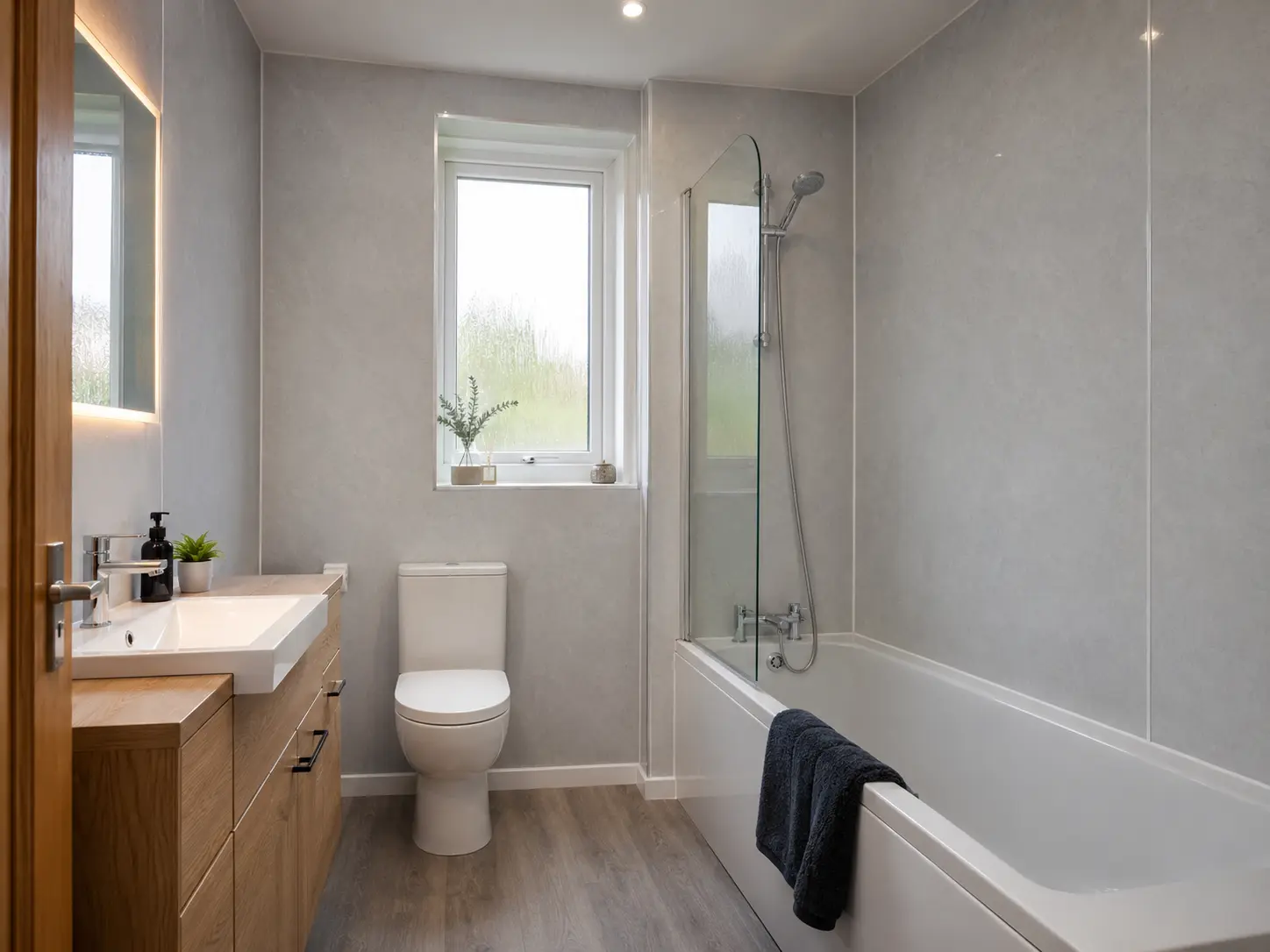
Notice what happens after a bath or shower
A bathroom puts moisture into the air during ordinary use. When that moisture meets a cold surface, it can form condensation. A misted mirror immediately after showering is different from walls and windows that stay wet for long periods. Note where the moisture appears, how long it lasts and whether there is a musty smell or recurring mould. These details help explain the problem when you ask for help.
Do not assume every damp mark is caused by poor ventilation. A leaking pipe, failed seal or another building problem may need repair. Photograph recurring patches and note whether they appear after washing or in other conditions. New tiles, panels or paint should not be used to hide an unresolved cause. The right work depends on what is making the area damp in the first place.
Understand how your existing ventilation works
Find out whether the bathroom has an intermittent extractor, a continuously running system or another arrangement serving the home. The controls may be linked to a light, a timer or a separate setting. Read the instructions or ask the installer to explain them. Do not turn off an unfamiliar system simply because it continues after the light goes out; that may be part of how it is intended to operate.
A window and background vents can form part of the ventilation arrangement, but their role depends on the system. Keep intended vents clear and use the equipment according to its instructions. If you have a whole-house system, ask for advice before changing openings or controls. General advice about one bathroom fan should not override the requirements of a different ventilation installation.
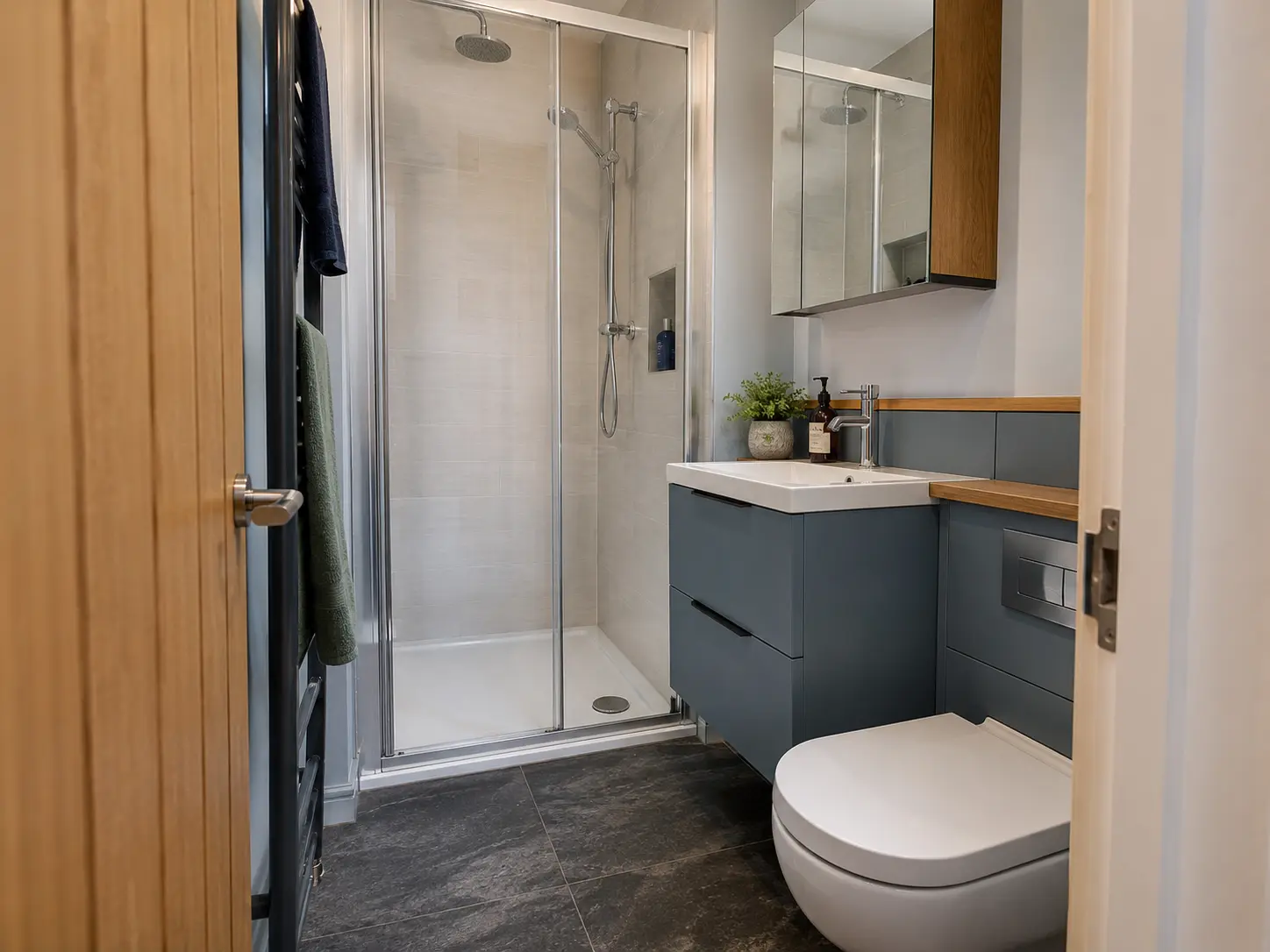
Have the fan and air route checked together
A fan needs a suitable route for the air it extracts, as well as a way for replacement air to enter. Its performance cannot be judged only by the size of the grille visible in the bathroom. Ask a competent installer to check the complete arrangement, including the duct route and outlet, before deciding that a more powerful-looking replacement will solve the problem.
Bathroom electrical work should be handled by a qualified electrician. Explain the existing condensation and ask which products and positions suit the room and installation. Avoid choosing a fan on noise level alone, although noise is worth discussing if it discourages normal use. The aim is ventilation that works as intended and is practical to operate, not simply a new fitting that looks neater on the ceiling.
Include ventilation when planning a bathroom refit
Tell the bathroom fitter about persistent moisture before the layout and quote are agreed. Replacing the suite is a useful opportunity to check the ventilation, but it should be listed clearly in the quote. Ask who is responsible for the assessment, electrical work and any changes to ducting or outlets. A vague note saying fan included does not explain whether the existing arrangement has been checked.
Changes elsewhere in the home can matter too. New windows or draught-proofing may affect the movement of air, so discuss ventilation with the relevant installer when those improvements are planned. Do not block an intended vent to make a new wall finish look tidier. The bathroom design should allow for the equipment and access it needs instead of treating ventilation as an awkward detail to conceal.
Keep accessible parts clean as instructed
Dust or other blockages can affect ventilation equipment. Follow the manufacturer's instructions for routine cleaning and how to switch the equipment off safely before cleaning, and do not open electrical parts or remove components beyond what those instructions allow. If the fan is damaged, unreliable or unusually noisy, get it checked rather than trying to repair wiring yourself. Keep the model details so the correct information can be found.
Ask which parts need professional servicing and which you can maintain normally. Access should remain available after cabinets, ceilings or wall finishes are fitted. The handover should explain the controls, any automatic operation and how to recognise a problem. A system that is never used correctly or cannot be reached for maintenance will not provide the intended benefit simply because it was included in the original quote.

Check whether the moisture problem improves
After the agreed work, watch what happens during normal use. Note whether wet surfaces dry, whether the fan behaves as explained and whether the same marks return. If the problem continues, report those observations and ask for the cause to be checked again. Repeatedly wiping or painting over the same patch is not a substitute for finding an unresolved leak, building defect or ventilation problem.
If you rent, tell your landlord or managing agent about persistent damp, mould or faulty ventilation and keep a record of the report. If you own the home, seek advice from an appropriate building or ventilation professional. A bathroom refit should leave the room suitable for ordinary washing, with the ventilation and any underlying repairs understood alongside the new fittings and finishes.
For the fitting service, see bathroom installation in kirkcaldy. You can also read condensation and mould in bathrooms and choosing bathroom surfaces for cleaning.