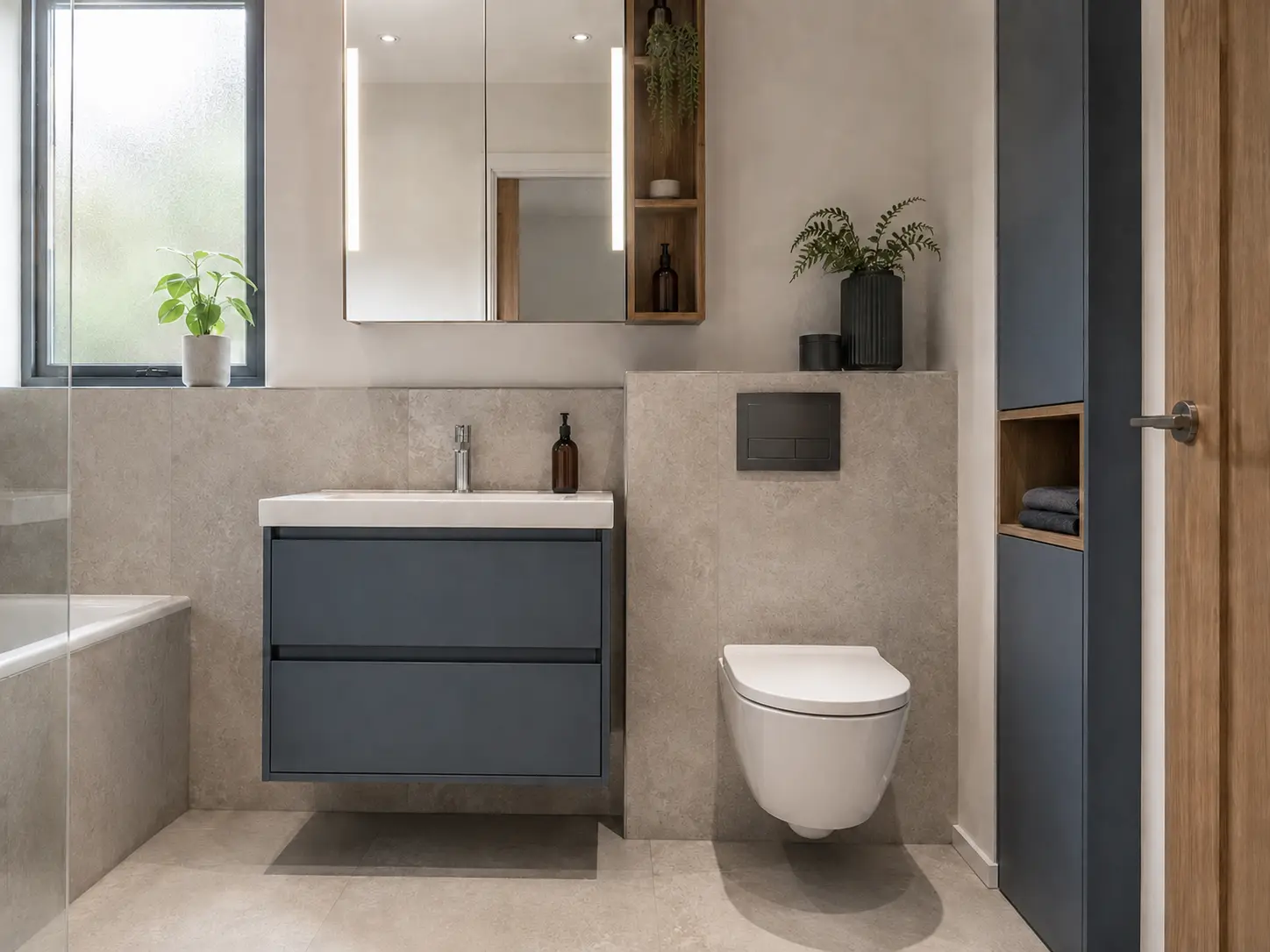
Think about how you clean the bathroom now
Look at the places that take the most effort in your current room. They may be narrow gaps beside furniture, bottles on the shower tray, textured surfaces or areas behind taps. Write down those problems before choosing new products. A different material may help, but changing the layout or providing better storage can also make ordinary cleaning less awkward.
Be realistic about the routine you want to keep. Every bathroom needs care, and a label such as easy-clean does not mean every mark disappears without effort. Ask for the actual maintenance instructions for the shortlisted products. The useful comparison is what you will need to do in your own room, not just how clean a sample looks when it is new and empty.
Compare tiles and panels beyond the first impression
Tiles offer different sizes, surfaces and grout arrangements. Larger tiles may reduce the number of grout joints in some layouts, but cuts, corners and the chosen pattern still matter. Look at the tile and grout together, including how they are cleaned. A heavily textured finish can have different care needs from a smoother one, and the particular product should be suitable for its position.
Wall panels cover larger areas and generally avoid the many grout lines of a tiled wall. Their joints, trims and seals still need care. Different panel systems use different materials, so follow the instructions for the selected range. Compare the complete installation around the bath or tray, window and shelves rather than assuming the broad panel surface tells you everything about maintaining the finished wall.
Check the taps, basin and furniture edges
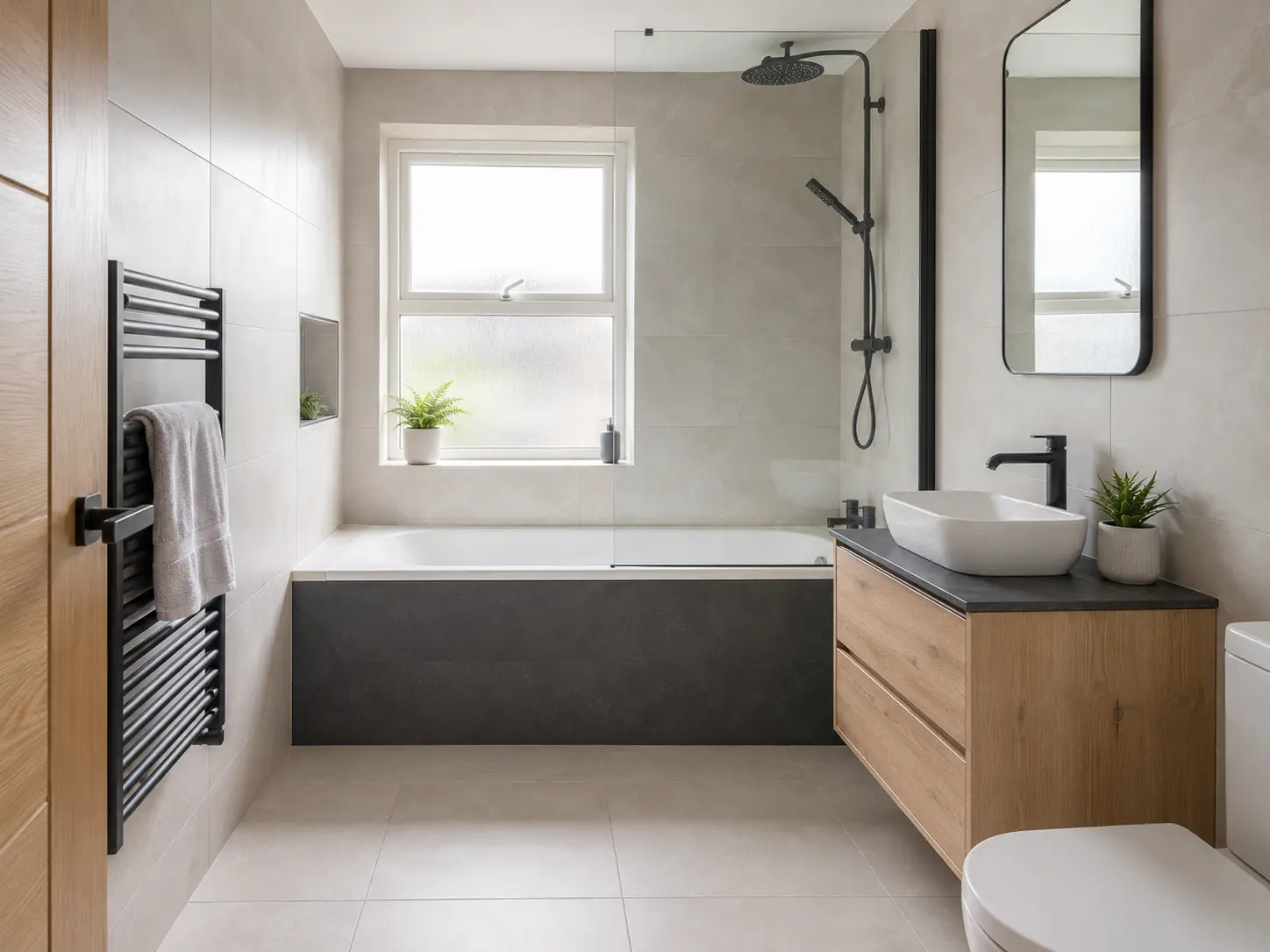
The shape of a basin and position of its tap affect how easily you can wipe around them. Leave enough access behind and beside fittings instead of crowding them into a tight corner. A small basin that causes awkward splashing may create more cleaning than a slightly larger one. Compare the bowl and tap together, with the way the room will actually be used in mind.
Furniture needs its own care instructions, including what to do about water on edges or around the basin. Decorative tap finishes can be damaged by some cleaning products, so do not assume the spray used on the ceramic is suitable for everything beside it. Check the products you normally use before choosing a finish that needs a routine you are unlikely to follow.
Look at how the shower screen opens and drains
A shower screen is not only a sheet of glass. Seals, hinges, tracks and the meeting points around the tray also need cleaning. Look at the actual model and ask how those parts can be reached. Some doors have features intended to improve access, but they vary between products. The manufacturer's drawing and care guidance are more useful than a general claim that one door type is always easier.
If the glass has a coating, follow its cleaning instructions. A coating does not remove the need for care or make every chemical suitable. Keep the drain accessible as well, using the product's guidance for routine cleaning. Plan somewhere for shampoo and soap so bottles do not gather around the tray edge or cover areas that need to be checked and cleaned regularly.
Choose flooring for the bathroom conditions
A floor needs to suit its intended use before its colour or cleaning claims settle the choice. Tiles, vinyl products and other flooring types have different specifications and installation requirements. Check the exact product rather than assuming everything sold in a similar category handles water in the same way. Ask how edges, joints and the surface beneath will be prepared and finished.
Read the care instructions and think about the equipment you use. Cleaning chemicals, abrasive tools or excess water may not suit every finish. Even a textured bathroom floor can become slippery when wet or soapy. Ask about the slip resistance of the actual flooring and follow its cleaning instructions. Keep the layout practical for cleaning the floor around the toilet, furniture and shower entrance, rather than leaving inaccessible slots between attractive fittings.
Include cleaning access in the final layout
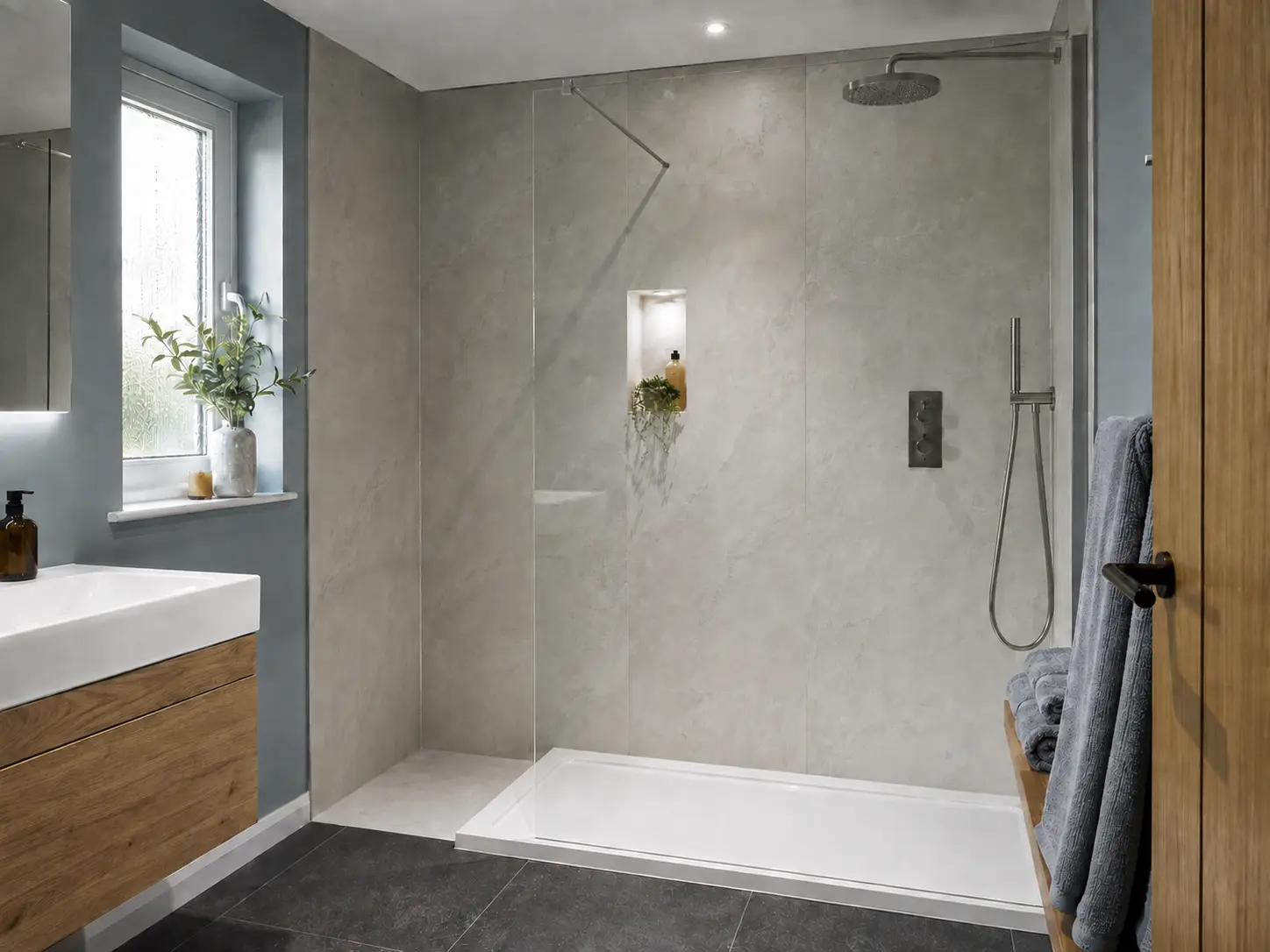
Review the room with the fittings at their actual sizes. Can you reach around the toilet, wipe the basin edges and clean the screen without squeezing between furniture? Would a different cabinet depth or shower opening remove a difficult gap? Small layout changes can make a lasting difference to the cleaning routine, especially in a compact bathroom with limited room to move.
Keep the product names and instructions after fitting, and ask how seals, joints and drains should be checked. Report leaks or recurring damp rather than trying to clean away an underlying fault. An easier-to-clean bathroom comes from suitable surfaces, sensible storage and access around the fittings working together. Choose the combination you understand and can maintain, with the necessary preparation and installation included in the written quote.
For the fitting service, see bathroom design in kirkcaldy. You can also read cleaning and maintaining wall panels and bathroom storage ideas.