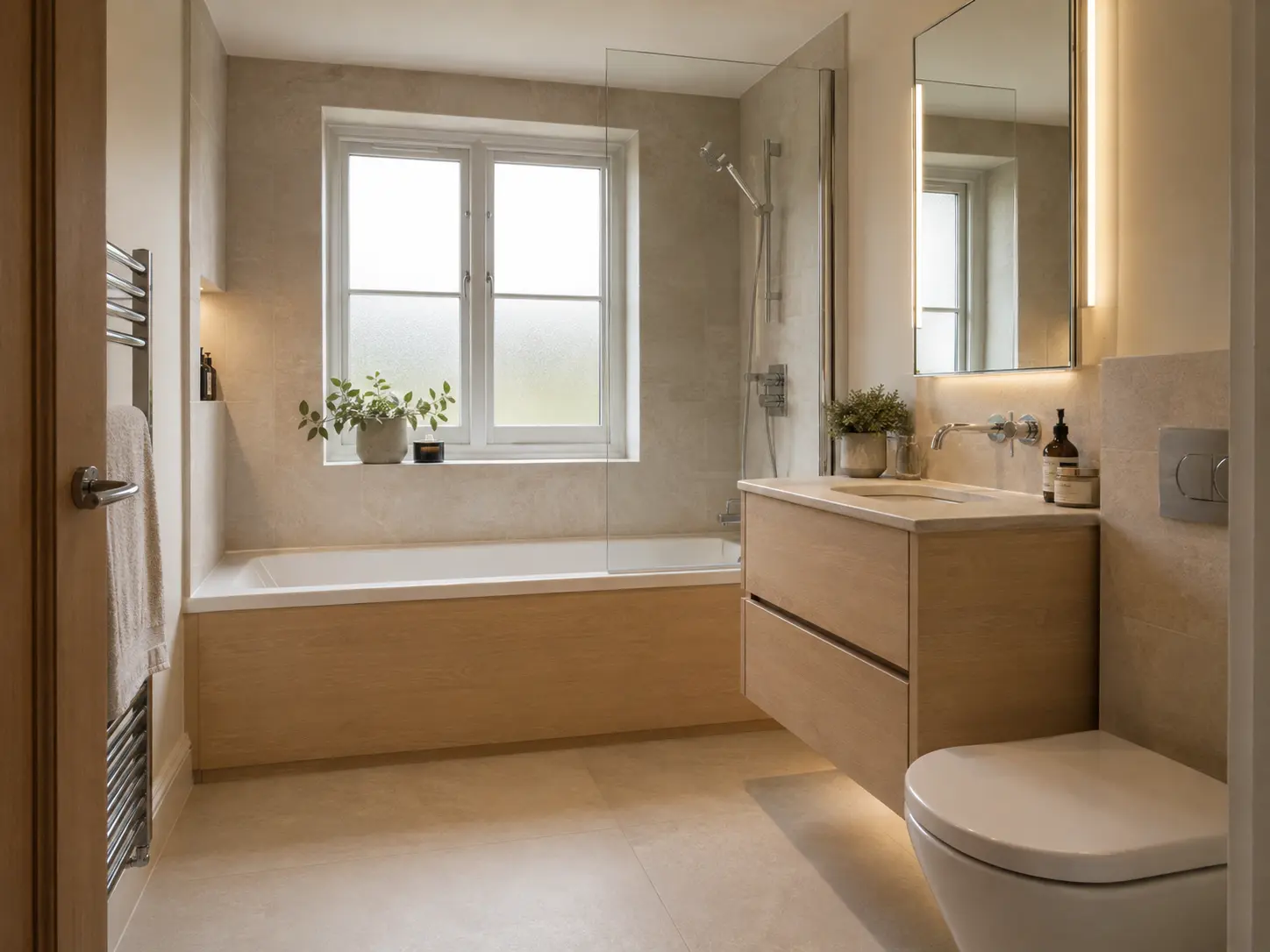
Choose whether the room should look warm or cool
Neutral does not mean every surface has the same colour. Warm whites, beige and some stone-coloured finishes can sit beside wood, while cooler greys may work with different furniture and metal finishes. Start by choosing the combination you like in actual samples. Names such as ivory, stone or light grey are useful labels, but they do not show how two products will look together.
If part of the room is staying, include it in this comparison. The existing bath, basin or floor may affect which wall finish looks comfortable beside it. A new brilliant white surface can make an older warm white fitting appear different by comparison. You do not necessarily need to replace the fitting; you may simply need a different surrounding finish to achieve the result you want.
Compare large surfaces before the small details
The walls, floor and main furniture occupy most of the view, so decide how those parts work together first. You might choose pale walls with a darker floor, or a similar light finish across several surfaces. Look at the samples from the doorway as well as close up. A finish that seems subtle in a small piece can become much more noticeable across a whole wall.
Do not rely on every material matching exactly. A slight difference can look accidental if you expected a perfect match, while a clearly different wooden cabinet can make the choice feel deliberate. Try a few combinations and remove the ones that compete. Keep the number of different finishes manageable so the room does not become a collection of individually attractive products that do not work together.
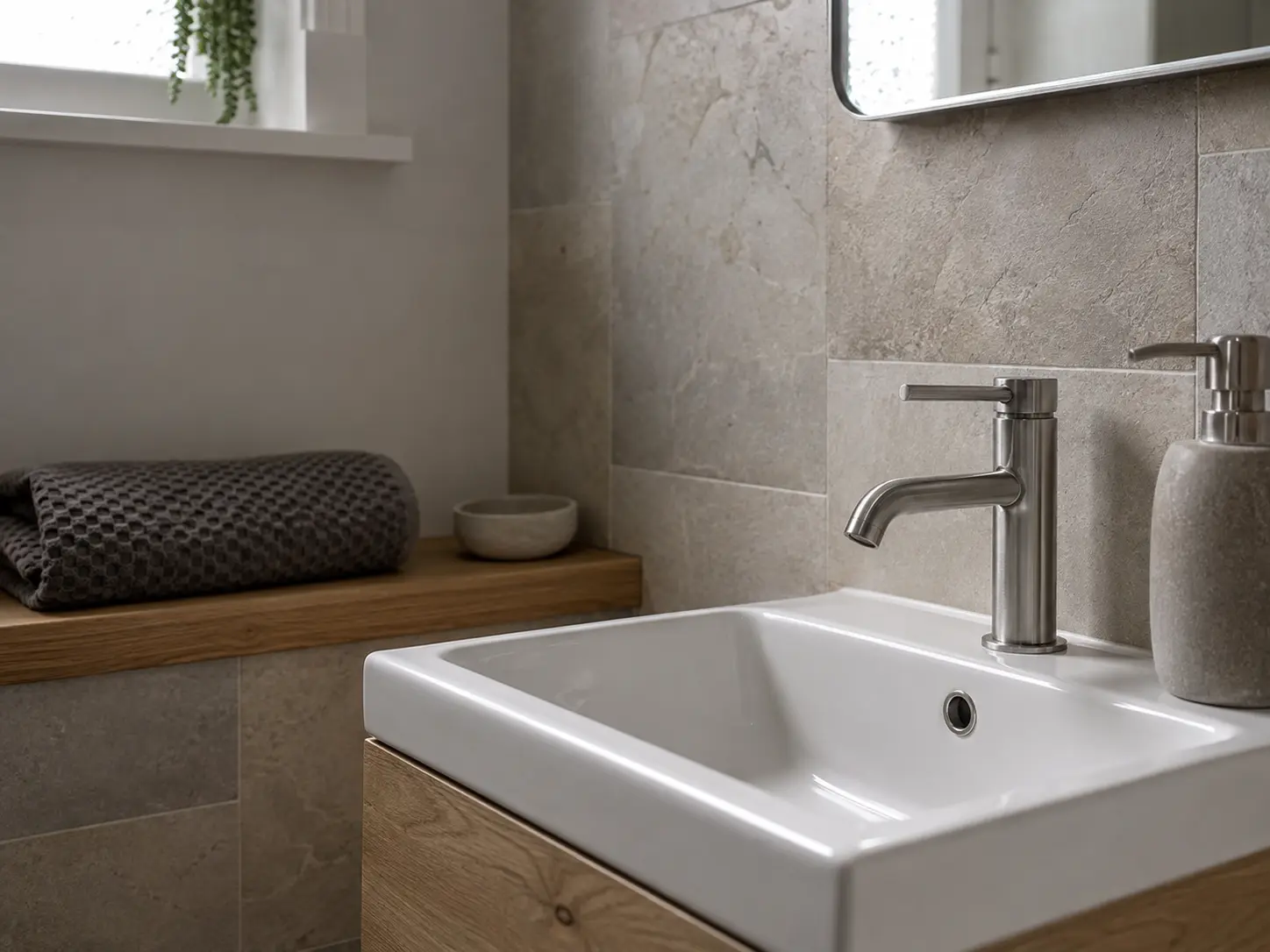
Use texture without making cleaning difficult
A plain bathroom can still have variety through the surface of a tile, wooden furniture or a different cabinet shape. Before choosing a textured finish, ask how it is cleaned and where it is intended to be used. A surface suitable for a dry decorative wall may not be the right choice inside a shower. Check that the product is suitable for that wall before choosing it for its appearance.
Look at edges and joints too. Grout colour changes how clearly you see each tile, and panel systems have their own joint and trim arrangements. Ask how the chosen finish will meet the bath, tray, window and neighbouring wall. A simple-looking design often depends on those practical details being planned carefully rather than expecting the material colour to hide every change of direction.
Choose storage that supports the simple appearance
A neutral room can still look cluttered if everyday bottles and towels have no home. Decide what needs to stay near the basin and shower, then compare drawers, mirrored cupboards and shelves. Check the internal dimensions around the plumbing. A cabinet with a neat front is less helpful if it cannot hold the toiletries you want to put away.
Wooden basin storage can add warmth beside pale walls, while painted furniture can keep the colours closer together. Either should leave room to open doors and move. A shelf built into the shower wall can provide a place for bottles where the construction allows it. The point is to make ordinary use straightforward, not to hide so much that frequently used items become difficult to reach.
Look at the room under the right lighting
Pale finishes respond to the light around them, so view samples in daylight and under the room lighting. If new lights are planned, discuss their effect before ordering the surfaces. Useful light at the mirror matters for washing and grooming, and the shower entrance should be easy to see. A qualified electrician should advise on bathroom lighting products and their positions.
The window also affects privacy and practical use. Keep access to its handle and think about what can be seen from outside under different lighting conditions. Privacy glazing and safety requirements are separate specifications to check with the supplier. Avoid choosing a window treatment only because it matches the room colours if it interferes with opening, cleaning or the ventilation arrangement.
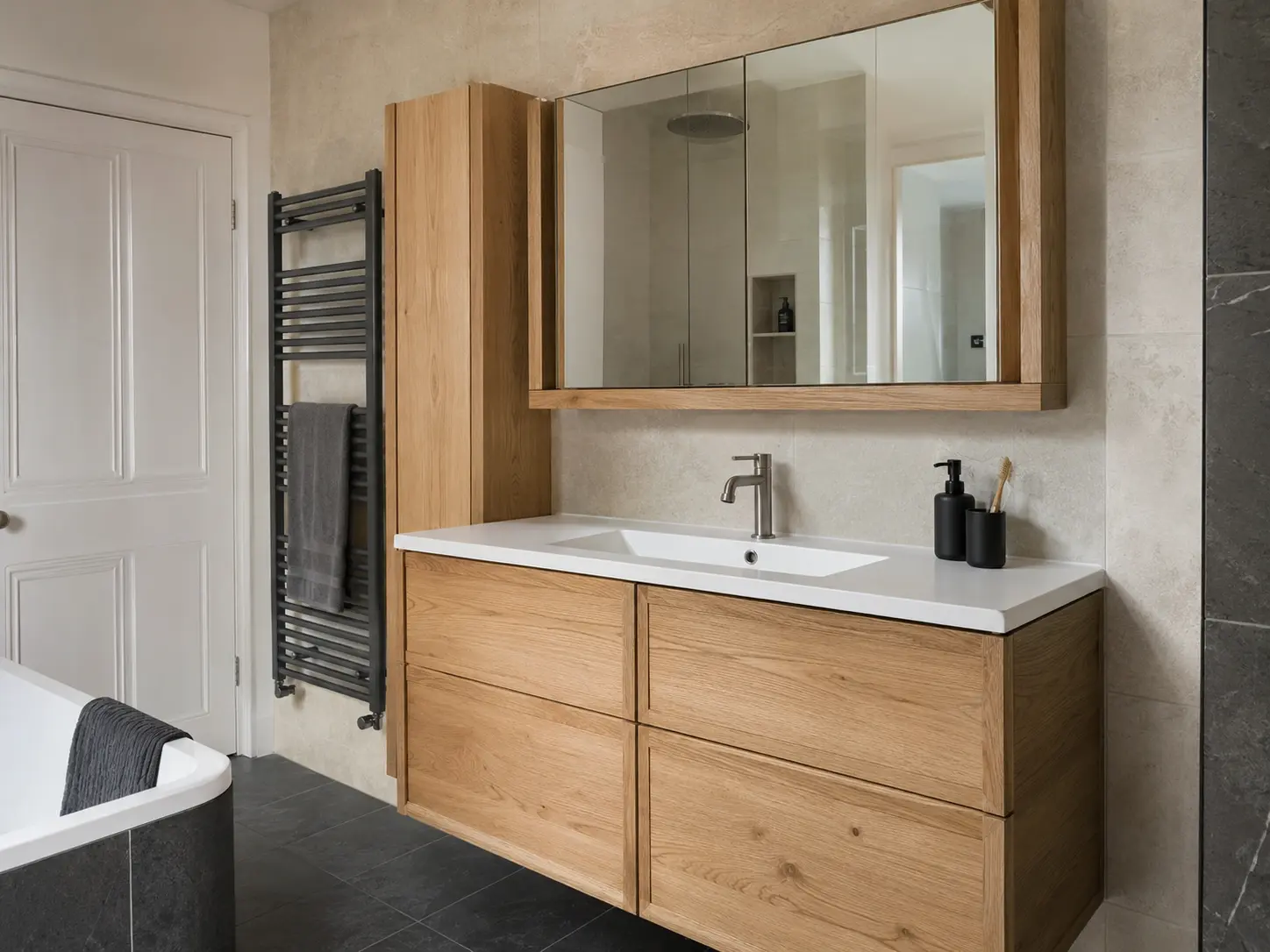
Keep the final choices clear in the quote
Record the actual products, sizes and colour codes once you have settled on them. Include the grout, trims and any metal finishes that need to match. If a product is replaced because of availability, compare the proposed substitute with the other samples before approving it. Similar descriptions do not guarantee that the replacement will look the same or need the same fitting work.
The finished plan should combine the appearance with the bathroom you need: a comfortable bath or shower, usable storage and suitable surfaces. Check the quote for preparation, supply, installation and finishing, not just the visible products. A neutral bathroom works best when the choices are deliberate and practical, with enough detail agreed beforehand to avoid surprises when the room is fitted.
For the fitting service, see neutral bathrooms in kirkcaldy. You can also read bathroom colour ideas and storage ideas for small bathrooms.